
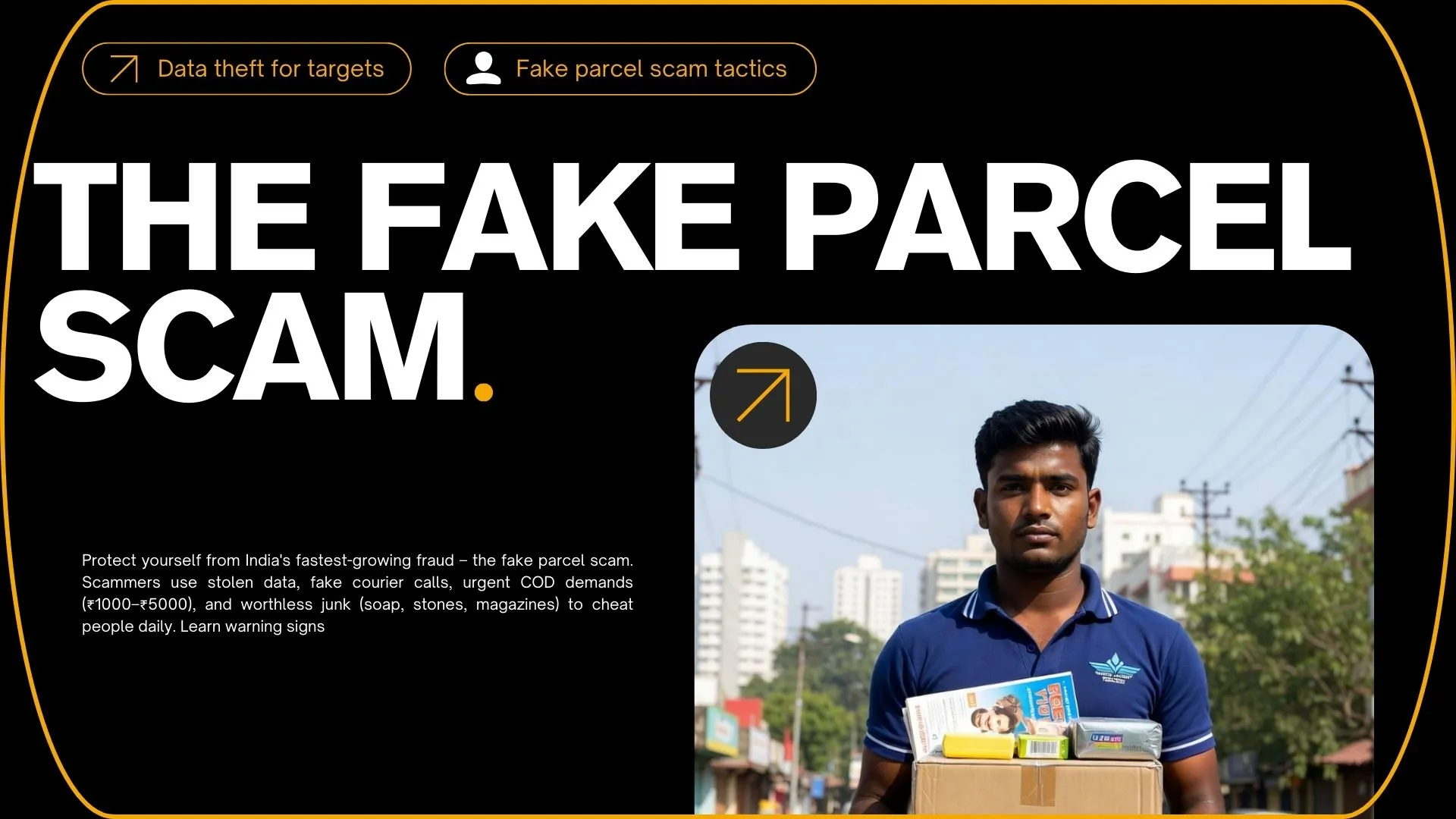
Imagine this: You receive a call saying you have an urgent parcel waiting. The delivery person insists on immediate cash-on-delivery payment. You pay ₹2,500 for what you believe is your online order, only to open a box filled with worthless junk—soap bars, old magazines, or stones.
Welcome to India’s fastest-growing fraud: the fake parcel scam. And it’s costing Indians lakhs every single day.
The Anatomy of the Fake Parcel Scam
This scam operates with shocking precision:
Stage 1: Data Theft Scammers obtain your personal information—name, address, phone number—through data breaches, leaked e-commerce databases, or even by purchasing information from corrupt employees.
Stage 2: The Setup You receive a professional-looking call or SMS claiming to be from a courier company (BlueDart, DTDC, India Post, etc.). They mention a parcel in your name that requires immediate cash-on-delivery payment.
Stage 3: Creating Urgency The scammer creates panic: “Ma’am, if you don’t accept this today, the parcel will be returned, and you’ll lose your money.” Or they might claim it’s a gift from a relative, a government benefit, or a surprise delivery.
Stage 4: The Delivery A person in a fake courier uniform arrives with a professionally wrapped package. They demand payment immediately—typically between ₹1,000 to ₹5,000. The box is often sealed with tape, making inspection difficult.
Stage 5: The Revelation After paying, you open the package to find worthless items: bricks, newspapers, soap bars, cheap plastic items, or absolutely nothing of value.
Stage 6: The Chase When you try to contact the courier company, you discover they have no record of the shipment. The phone numbers are fake or switched off. The “delivery person” has vanished.
Real Stories from Across India
Mumbai, Maharashtra Sunita Sharma, a homemaker, paid ₹3,200 for what she believed was a smartwatch she’d ordered. The box contained old magazines and a broken phone case. “I trusted the uniform and the professional packaging,” she told local police.
Bangalore, Karnataka Vikram Reddy received a call about a “laptop delivery” requiring ₹5,800 COD payment. The sophisticated scammer even sent him a fake tracking number via SMS. The box contained ceramic tiles worth maybe ₹200.
Delhi NCR Elderly couple Mr. and Mrs. Khanna were told their son had sent them a gift. Excited, they paid ₹4,500. Inside: a cheap blanket and plastic utensils. “They exploited our emotions,” Mr. Khanna said.
Why This Scam Works So Well in India
- Cash-on-Delivery Culture: India’s preference for COD makes this scam particularly effective
- High E-commerce Adoption: More people shopping online means more potential victims
- Trust in Uniforms: Indians tend to trust people in official-looking courier uniforms
- Information Overload: People often forget what they’ve ordered or expect surprise gifts
- Elderly Targets: Senior citizens who may not be tech-savvy are especially vulnerable
- Data Breaches: Frequent leaks of customer databases feed scammers’ operations
The Sophisticated Variations
Variation 1: The “Failed Delivery” Scam You missed a delivery (you didn’t). Now you must pay “storage charges” to receive your parcel.
Variation 2: The “Customs Fee” Scam An international parcel requires customs clearance. Pay the fee now or lose your package.
Variation 3: The “Gift” Scam Someone sent you a surprise gift! Pay COD charges to receive it. Perfect for festivals and birthdays.
Variation 4: The “Product Sample” Scam You’ve been selected to receive free product samples. Just pay a small “shipping fee.”
Variation 5: The “Return Pickup” Scam There’s been a mistake, and a previous delivery needs to be collected. You must pay a refund-processing fee.
Warning Signs to Spot Fake Parcel Scams
🚨 MAJOR RED FLAGS:
- Unexpected COD parcels you don’t remember ordering
- Delivery person refuses to let you inspect the package before payment
- Pressure to pay immediately or lose the parcel
- No proper tracking number or the tracking doesn’t work on official courier websites
- Caller ID shows mobile number instead of courier company landline
- Delivery person can’t provide official identification or company ID card
- Packaging looks unprofessional or resealed
- COD amount doesn’t match anything you’ve ordered
- You receive a call before the “delivery person” arrives (coordination scam)
- The “tracking SMS” has spelling errors or suspicious links
How to Protect Yourself
Before Accepting Any COD Parcel:
- Always Verify First
- Check your e-commerce order history before accepting any COD delivery
- Call the official courier company number (from their website, not the caller ID)
- Verify with family members if it’s claimed to be a gift
- Demand Transparency
- Ask for the tracking number and verify it on the official courier website
- Request to see the delivery person’s official ID card
- Insist on inspecting the package before making payment
- Check the Documentation
- Legitimate deliveries have proper invoices and tracking information
- The sender’s details should be clearly visible
- Look for official company seals and packaging
- Trust Your Instincts
- If something feels off, refuse the delivery
- Don’t let anyone pressure you into immediate payment
- It’s better to miss a real delivery than fall for a scam
- Use Technology
- Install official courier company apps and track deliveries yourself
- Enable order notifications from e-commerce platforms
- Keep a digital record of all your online purchases
What to Do If You’ve Been Scammed
Immediate Steps:
- Don’t Panic: Acting quickly improves your chances of recovery
- Preserve Evidence: Keep the package, any documentation, and note down all details
- File a Police Complaint: Go to your local police station or cybercrime cell immediately
- Report to Courier Company: Even though they’re not responsible, they need to know their brand is being misused
- Bank Notification: If you paid via card or digital payment, inform your bank
- Consumer Forum: File a complaint with the National Consumer Helpline
- Social Media Alert: Warn others in your community about the specific scam pattern
Information to Gather:
- Date and time of delivery
- Physical description of the delivery person
- Any phone numbers used
- Photos of the package and contents
- Any documents or receipts provided
- CCTV footage if available (from your building or street)
What Law Enforcement Is Doing
Police across Indian cities have increased surveillance on fake parcel scams:
- Cybercrime cells are tracking organized gangs
- Courier companies are implementing better security measures
- Data protection laws are being strengthened
- Public awareness campaigns are being launched
- Coordination between e-commerce platforms and law enforcement is improving
However, the responsibility still largely falls on consumers to remain vigilant.
The Role of E-commerce Platforms and Courier Companies
Legitimate businesses are taking action:
E-commerce Platforms Should:
- Send SMS/email alerts for every COD order placed
- Implement stricter data protection measures
- Educate customers about potential scams
- Provide easy verification methods for deliveries
Courier Companies Should:
- Issue official, verifiable ID cards to all delivery personnel
- Implement QR code scanning systems for package verification
- Maintain customer service helplines that actually respond
- Report suspicious activity to authorities
How TrustAnalyzer Helps Combat This Issue
At TrustAnalyzer, we believe transparency builds trust. While we focus on review integrity, the same principles apply to all e-commerce transactions:
- Verification Systems: Ensuring all parties in a transaction are authenticated
- Transparent Communication: Clear documentation at every step
- Customer Education: Empowering consumers with knowledge
- Business Accountability: Holding companies responsible for their processes
The Bigger Picture: Building a Safer E-commerce Ecosystem
The fake parcel scam is just one symptom of a larger problem: the lack of trust in India’s digital marketplace. Every successful scam erodes consumer confidence and hurts legitimate businesses.
As consumers, we must:
- Stay informed about evolving scam tactics
- Share information within our communities
- Support businesses that prioritize security and transparency
- Demand better protection from platforms and government
- Report every scam, no matter how small
Remember: Scammers count on your embarrassment or assumption that “it’s just a small amount.” Every report helps law enforcement identify patterns and catch criminals.
Your vigilance protects not just you, but countless others who might be targeted next.