The phone looked perfect. Same Apple logo, same packaging, same model number. Raj from Pune paid ₹35,000 for what he thought was a genuine iPhone from a “trusted” online seller. Three weeks later, the phone died. When he took it to an Apple service center, he learned the truth: it was an elaborate fake, worth maybe ₹5,000.
Raj isn’t alone. India’s counterfeit product market is estimated at over ₹1 lakh crore annually, affecting everything from smartphones to medicines, cosmetics to car parts. And the line between real and fake is getting harder to see.
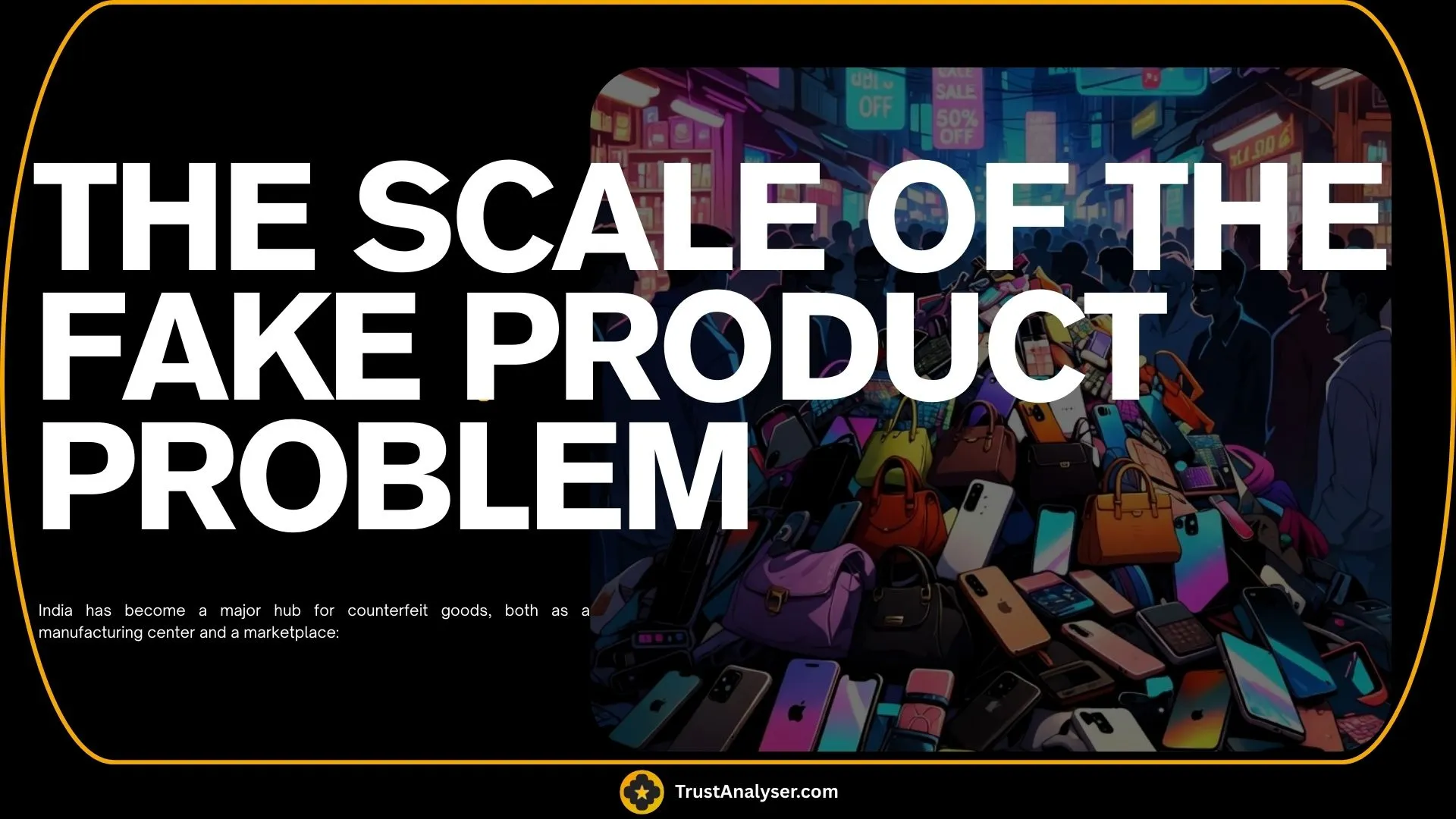
The Scale of the Fake Product Problem
India has become a major hub for counterfeit goods, both as a manufacturing center and a marketplace:
Most Counterfeited Categories:
- Electronics (phones, chargers, earphones, power banks)
- Fashion and accessories (bags, shoes, watches, sunglasses)
- Cosmetics and personal care products
- Pharmaceuticals and supplements
- Automobile parts and accessories
- Branded FMCG products
- Educational and professional certificates
- Designer clothing and footwear
The Economics:
- Counterfeit goods are often sold at 60-80% of the genuine product price
- Profit margins for counterfeiters can reach 300-500%
- The industry employs thousands in underground manufacturing units
- E-commerce has made distribution easier and detection harder
How Fake Products Enter the Market
Route 1: International Smuggling Bulk counterfeit goods manufactured in neighboring countries (especially China) are smuggled into India through porous borders or hidden in legitimate cargo.
Route 2: Domestic Manufacturing Small-scale units in industrial areas of Delhi, Mumbai, Surat, and other cities produce fake versions of popular brands. These operations often operate semi-legally, with some government corruption enabling their survival.
Route 3: E-commerce Platforms The easiest route for scammers. Third-party sellers on major platforms list fake products with stolen images of genuine items. By the time customers complain, the seller has disappeared or created a new account.
Route 4: Social Media Sales Instagram, Facebook, and WhatsApp groups have become major marketplaces for counterfeit luxury goods, with sellers operating entirely off-platform after initial contact.
Route 5: “Replica” Market Some sellers openly advertise “first copy,” “AAA copy,” or “replica” products, creating a grey market where consumers knowingly buy fakes—but often receive even worse quality than advertised.
The Anatomy of a Sophisticated Fake
Modern counterfeiters have become incredibly sophisticated:
Packaging:
- Near-perfect reproduction of brand packaging
- Hologram stickers (often fake themselves)
- Serial numbers and barcodes that look authentic
- QR codes that lead to fake verification websites
- Shrink-wrapping and seal labels identical to originals
Product Quality:
- First few uses may seem normal to avoid immediate returns
- Components that look similar but are made from inferior materials
- Software modifications that mimic genuine product interfaces
- Even fake warranty cards and authenticity certificates
Digital Deception:
- Professional product photography (often stolen from brand websites)
- Detailed product descriptions copied from genuine listings
- Fake “verified seller” badges and certifications
- Manipulated customer reviews (remember Article 1?)
- Doctored unboxing videos on YouTube
Real-Life Consequences of Fake Products
Health Dangers:
Case 1: Counterfeit Cosmetics in Delhi A woman in South Delhi bought what she believed was a imported face cream from an Instagram seller. After two weeks of use, she developed severe skin burns. Laboratory testing revealed the cream contained harmful chemicals banned in India.
Case 2: Fake Medicines in Mumbai A diabetic patient purchased insulin from an unauthorized online pharmacy. The counterfeit medication had zero active ingredients. His condition deteriorated dangerously before the issue was discovered.
Safety Risks:
Case 3: Fake Phone Chargers A family in Hyderabad lost their home to a fire caused by a counterfeit phone charger that short-circuited while charging overnight. The charger had no safety mechanisms despite having all the “right” certification marks.
Case 4: Automotive Parts Tragedy A businessman in Chennai installed fake brake pads purchased online. The counterfeit parts failed during highway driving, resulting in a serious accident. Investigation revealed the parts were made of compressed cardboard, not the proper friction material.
Financial Losses:
Beyond the immediate waste of money, victims face:
- No warranty or customer support
- Inability to resell the product
- Cost of repairs or replacements
- Potential legal issues if unknowingly resold
- Loss of trust in online shopping
Category-Specific Warning Signs
Electronics:
🔍 Check:
- IMEI number verification (for phones) on brand website
- Software updates from official sources
- Packaging quality and printing details
- Weight and build quality (fakes often feel lighter)
- Authorized seller status
- Price (if it’s too good to be true, it is)
Cosmetics & Personal Care:
🔍 Check:
- Batch code and manufacturing date
- Consistency and smell (fakes often smell chemical)
- Packaging quality (printing, fonts, colors)
- Purchase from authorized retailers only
- Original price tags and MRP stickers
- Ingredient list accuracy
Fashion & Accessories:
🔍 Check:
- Stitching quality and consistency
- Hardware quality (zippers, buttons, clasps)
- Font and logo accuracy
- Material authenticity (leather, metal, etc.)
- Dust bags and authentication cards
- Authorized retailer status
Pharmaceuticals:
🔍 Check:
- Purchase only from licensed pharmacies
- Verify batch number with manufacturer
- Check for spelling errors on packaging
- Look for proper manufacturing and expiry dates
- Ensure packaging is intact and sealed
- Compare with images from official sources
How to Verify Product Authenticity
Before Purchase:
- Research the Seller
- Check seller ratings and reviews (critically!)
- Verify business registration and licenses
- Look for physical store address and contact details
- Check how long the seller has been in business
- Search for complaints about the seller online
- Verify Pricing
- Check official brand website for MRP
- Compare prices across multiple authorized sellers
- Be suspicious of discounts above 30-40% on popular items
- Check if “limited time offers” are actually limited
- Check Seller Authorization
- Visit brand website for authorized dealer list
- Call brand customer service to verify seller
- Look for official dealer certificates
- Check if seller is an official distributor
- Use Technology
- Scan QR codes and verify on official websites
- Use brand apps to verify serial numbers
- Check reviews on multiple platforms, not just the selling site
- Reverse image search product photos to check if they’re stolen
After Receiving the Product:
- Physical Inspection
- Check packaging for damage or resealing
- Verify all labels, stickers, and holograms
- Compare weight and dimensions with official specs
- Look for poor quality printing or spelling errors
- Digital Verification
- Register the product on brand website
- Verify serial number/IMEI with manufacturer
- Check warranty activation status
- Update software/firmware from official sources only
- Performance Testing
- Test all features within the return window
- Compare performance with reviews of genuine products
- Check battery life, charging speed, etc.
- Monitor for any unusual behavior
Legal Recourse for Victims
If you’ve purchased a counterfeit product:
Step 1: Contact the Seller
- Request immediate refund
- Document all communication
- Set a reasonable deadline
Step 2: Platform Complaint
- Report to the e-commerce platform
- Provide evidence of counterfeit
- Request platform intervention
Step 3: Consumer Forum
- File complaint with District/State/National Consumer Forum
- Provide proof of purchase and counterfeit evidence
- Seek compensation and action against seller
Step 4: Legal Action
- File FIR for fraud under IPC
- Report under Trademarks Act, 1999
- Contact brand owner (they may take legal action)
- File complaint with local consumer protection office
Step 5: Public Awareness
- Report seller on consumer complaint forums
- Share experience on social media (with evidence)
- Warn your community
- Help others avoid the same trap
What Brands and Platforms Are Doing
Brand Initiatives:
- Implementation of blockchain for product authentication
- QR code systems linking to verified databases
- Holograms and special inks difficult to replicate
- Direct-to-consumer sales channels
- Regular raids on counterfeit manufacturing units
- Legal teams dedicated to IP protection
E-commerce Platform Measures:
- Seller verification processes
- Brand registry programs
- Automated listing monitoring
- Buyer protection programs
- Dedicated anti-counterfeit teams
- Partnerships with brands for authentication
However, the scale of the problem still overwhelms current solutions.
The Hidden Cost to Society
Counterfeit products don’t just hurt individual consumers. They:
- Deprive governments of tax revenue (estimated ₹1 lakh crore+ annually)
- Destroy brand equity and innovation (why invest in R&D if others will copy?)
- Fund organized crime (counterfeit operations often finance other illegal activities)
- Risk public health and safety (substandard products cause injuries and deaths)
- Eliminate jobs in legitimate industries (authentic manufacturers lose business)
- Erode trust in the entire marketplace (making all commerce more difficult)
How TrustAnalyzer Addresses This Issue
Fighting fake products requires the same foundation that fights fake reviews: trust and transparency.
TrustAnalyzer helps businesses:
- Build authentic reputations through genuine customer feedback
- Showcase their commitment to quality and authenticity
- Differentiate themselves from counterfeiters
- Provide customers with verified purchase experiences
- Create communities of authentic buyers and sellers
When businesses can prove their authenticity through transparent, verified customer relationships, counterfeiters find it much harder to compete.
Your Action Plan: Shop Smart, Stay Safe
The 10 Commandments of Authentic Shopping:
- If the price seems too good, it probably is
- Verify the seller before the purchase, not after
- Use official brand channels when possible
- Never compromise on safety-critical items (medicines, car parts, baby products)
- Document everything (receipts, communications, product details)
- Test thoroughly within the return window
- Report every counterfeit (help stop the cycle)
- Educate your family and friends
- Support businesses that prove authenticity
- Trust your instincts (if something feels wrong, it probably is)
The Path Forward
India’s fight against counterfeit products is just beginning. E-commerce has made the problem more complex, but it’s also created new tools for fighting back:
- Better technology for authentication
- Stronger consumer awareness
- Improved legal frameworks
- Platform accountability
- Brand collaboration with law enforcement
But the most powerful tool remains an informed, vigilant consumer base that refuses to accept counterfeits as “normal.”
Every time you verify before buying, you’re not just protecting yourself—you’re making the market safer for everyone.